
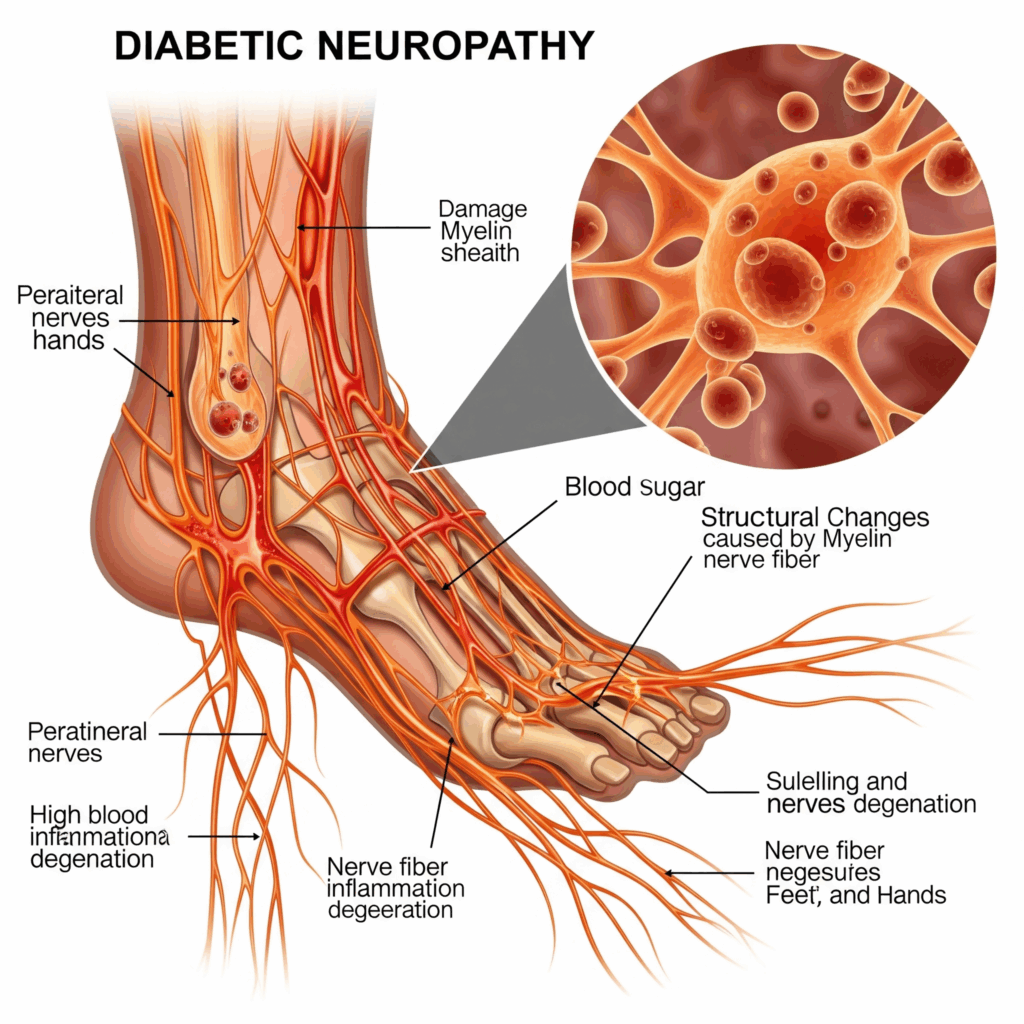
Diabetic Neuropathy is a type of nerve damage that can occur in individuals with diabetes. It is caused by high blood sugar levels that injure nerves throughout the body, most often affecting the legs and feet. Diabetic neuropathy can cause various symptoms, ranging from pain and numbness in the extremities to problems with the digestive system, urinary tract, blood vessels, and heart.
Types of Diabetic Neuropathy:
- Peripheral Neuropathy: The most common type, affecting the feet and legs, and sometimes the hands and arms.
- Autonomic Neuropathy: Affects the autonomic nervous system, which controls internal organs and functions like digestion, heart rate, and bladder control.
- Proximal Neuropathy: Affects the hips, thighs, or buttocks and can cause weakness in the legs.
- Focal Neuropathy: Affects specific nerves, often in the head, torso, or leg, and can cause sudden weakness or pain.
Symptoms:
- Peripheral Neuropathy: Numbness, tingling, burning or pain, usually starting in the toes or feet.
- Autonomic Neuropathy: Digestive issues (constipation, diarrhea), bladder problems, sexual dysfunction, and cardiovascular problems.
- Proximal Neuropathy: Sudden, severe pain in the hip, thigh, or buttock; weakness in the legs.
- Focal Neuropathy: Sudden pain, often in a specific area such as the eye or one side of the face.
Therapies for Diabetic Neuropathy:
- Blood Sugar Control: Maintaining blood sugar levels within the target range is crucial for preventing or slowing the progression of diabetic neuropathy.
- Medications:
- Pain Relievers: Over-the-counter medications like acetaminophen, ibuprofen, or prescription pain relievers.
- Antidepressants: Tricyclic antidepressants (amitriptyline, nortriptyline) and serotonin-norepinephrine reuptake inhibitors (duloxetine) can help relieve pain.
- Anticonvulsants: Medications like gabapentin, pregabalin, and carbamazepine can reduce pain.
- Topical Treatments: Capsaicin cream or lidocaine patches can be applied to the skin to relieve localized pain.
- Physical Therapy: Exercises to improve strength, flexibility, and balance can help manage symptoms and prevent complications.
- Transcutaneous Electrical Nerve Stimulation (TENS): Uses low-voltage electrical currents to relieve pain.
- Alternative Therapies:
- Acupuncture: May help relieve pain and improve overall well-being.
- Biofeedback: Can help manage pain by controlling body functions like heart rate and muscle tension.
- Supplements: Alpha-lipoic acid and certain vitamins (B-complex, vitamin D) might help manage symptoms, though more research is needed.
- Lifestyle Modifications:
- Healthy Diet: A balanced diet can help manage blood sugar levels and overall health.
- Regular Exercise: Physical activity improves blood flow, muscle strength, and overall health.
- Foot Care: Proper foot care is essential to prevent complications like infections and ulcers. Regularly inspecting feet, wearing comfortable shoes, and keeping feet clean and dry are crucial.
- Pain Management Techniques:
- Relaxation Techniques: Methods like meditation, yoga, and deep breathing exercises can help manage pain and reduce stress.
- Cognitive Behavioral Therapy (CBT): Can help cope with chronic pain by changing thought patterns and behaviors.
Managing Diabetic Neuropathy:
Managing diabetic neuropathy involves a comprehensive approach that includes medical treatments, lifestyle changes, and regular monitoring by healthcare professionals. Early detection and proactive management are essential to prevent complications and improve quality of life.
Embrace a holistic approach to wellness and discover the transformative power of vitamin infusion therapy, acupuncture and more services.
At Ponce Medical Acupuncture and Intravenous Therapy, we are here to serve you.
Call for an appointment at 939-222-2554 or 787-284-6261, Monday through Thursday from 8:00 am to 2:00 pm and Saturdays from 10:00 am to 2:00 pm. Dr. Antonio González Sotomayor will gladly guide you on the day of your appointment.