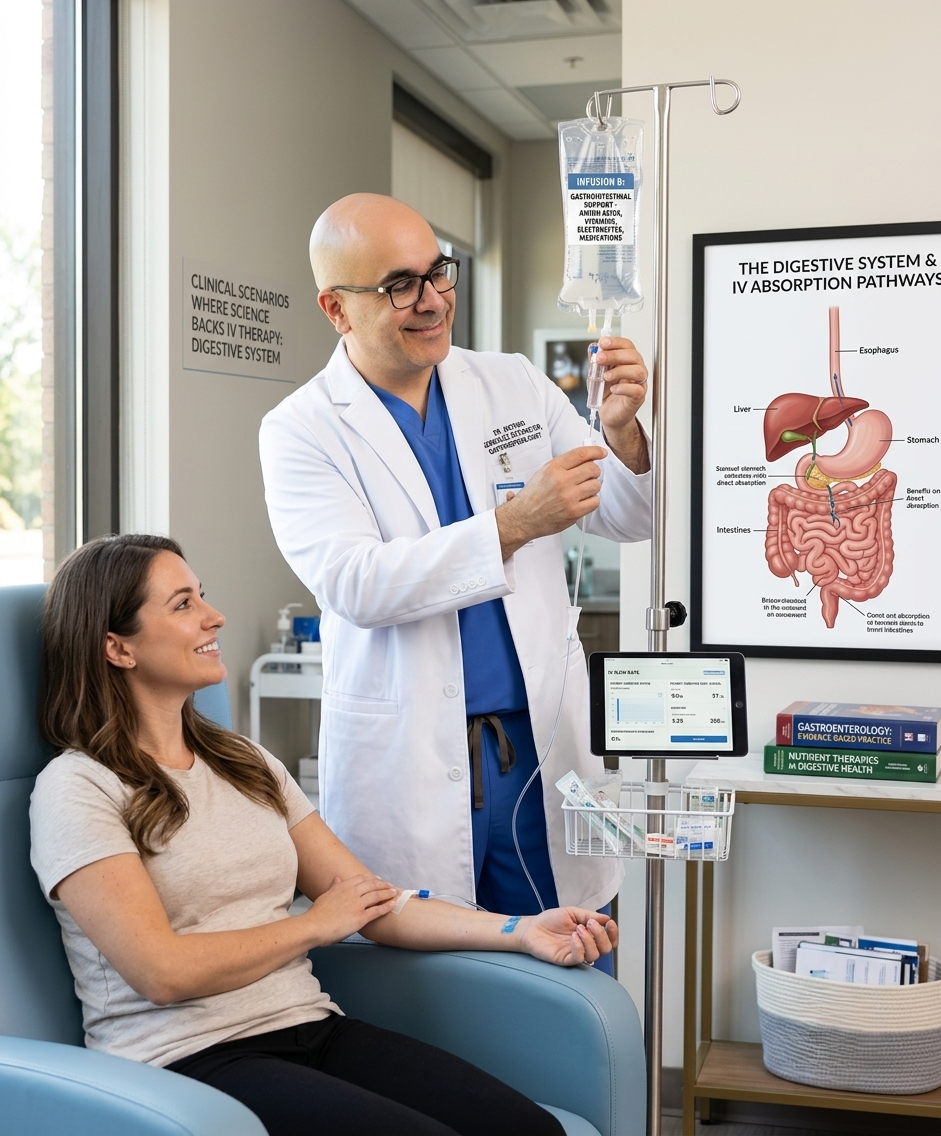
Intravenous Vitamin Therapy: Medical Evidence and Indications

IV Therapy and the Science

Introduction

Intravenous (IV) vitamin therapy has become increasingly popular in wellness clinics and integrative medicine settings.

However, from an evidence-based medical perspective, its use is not universal.

Clinical research supports IV vitamin therapy primarily in specific medical conditions involving documented deficiencies or impaired absorption, rather than as a general wellness treatment.

This article reviews the scientific evidence and clarifies when IV vitamin therapy is truly indicated from a medical standpoint.

What Is Intravenous Vitamin Therapy?

IV vitamin therapy involves the administration of vitamins and micronutrients directly into the bloodstream via an intravenous infusion.

This method bypasses the gastrointestinal tract, ensuring complete bioavailability.

From a medical perspective, this route is only useful when oral absorption is inadequate or when rapid correction of a deficiency is required.

Medically Accepted Indications

Scientific literature supports IV vitamin therapy in the following clinical scenarios:

1. Vitamin B12 Deficiency

Vitamin B12 deficiency can cause:

  • Megaloblastic anemia
  • Peripheral neuropathy
  • Cognitive impairment
  • Fatigue and weakness

IV or parenteral administration is indicated when there is:

  • Severe deficiency
  • Malabsorption
  • Neurological symptoms requiring rapid correction

Evidence:
Vitamin B12 replacement is more effective via parenteral administration in cases of malabsorption or severe deficiency.
PubMed Article (Vitamin B12 Deficiency)


2. Malabsorption Syndromes

Conditions that reduce nutrient absorption include:

  • Crohn’s disease
  • Celiac disease
  • Bariatric surgery
  • Short bowel syndrome

In these cases, oral supplementation may be insufficient, making IV or injectable therapy necessary.

Evidence:
The MSD Manual confirms that malabsorption often requires parenteral supplementation.
MSD Manual – Vitamin Deficiency Overview


3. Thiamine (Vitamin B1) Deficiency

Thiamine deficiency is a medical emergency in some cases.

It is commonly seen in:

  • Chronic alcohol use disorder
  • Severe malnutrition
  • Risk of Wernicke encephalopathy
  • Critically ill patients

IV administration is essential because delayed treatment can lead to irreversible neurological damage.

Evidence:
StatPearls – Wernicke Encephalopathy management
StatPearls – Wernicke Encephalopathy


4. Folate Deficiency

Folate deficiency may require parenteral therapy in cases of:

  • Severe anemia
  • Malabsorption
  • Pregnancy with documented deficiency

Treatment improves hematologic outcomes when deficiency is confirmed.


Why Does IV Therapy Work in These Cases?

Intravenous administration provides:

  • 100% bioavailability
  • Rapid correction of deficiencies
  • Bypassing of the gastrointestinal tract
  • Reliable delivery in critically ill patients

This makes it clinically valuable only in selected medical conditions.


What IV Vitamin Therapy Is NOT Proven For

Despite marketing claims, current scientific evidence does NOT support its use for:

  • Increasing energy in healthy individuals
  • “Boosting the immune system” without deficiency
  • Detoxification or “body cleansing”
  • Anti-aging or aesthetic enhancement
  • General wellness optimization

Most of these claims lack robust randomized clinical trials.

Safety Considerations

Although generally safe when properly administered, IV vitamin therapy may carry risks:

  • Injection site infection
  • Phlebitis (vein inflammation)
  • Electrolyte imbalance (depending on formulation)
  • Rare allergic reactions
  • Unnecessary medical costs if not indicated

Proper medical evaluation is essential before treatment.


Clinical Conclusion

IV vitamin therapy is a targeted medical intervention, not a general wellness treatment.

Evidence-based use is limited to:

  • Confirmed nutritional deficiencies
  • Malabsorption syndromes
  • Specific neurological or hematological conditions
  • Critically ill patients requiring rapid correction

Outside of these scenarios, scientific evidence does not support routine use in healthy individuals.


References


Type your paragraph here

Related Posts

Join Our Newsletter

Call for your Appointment