
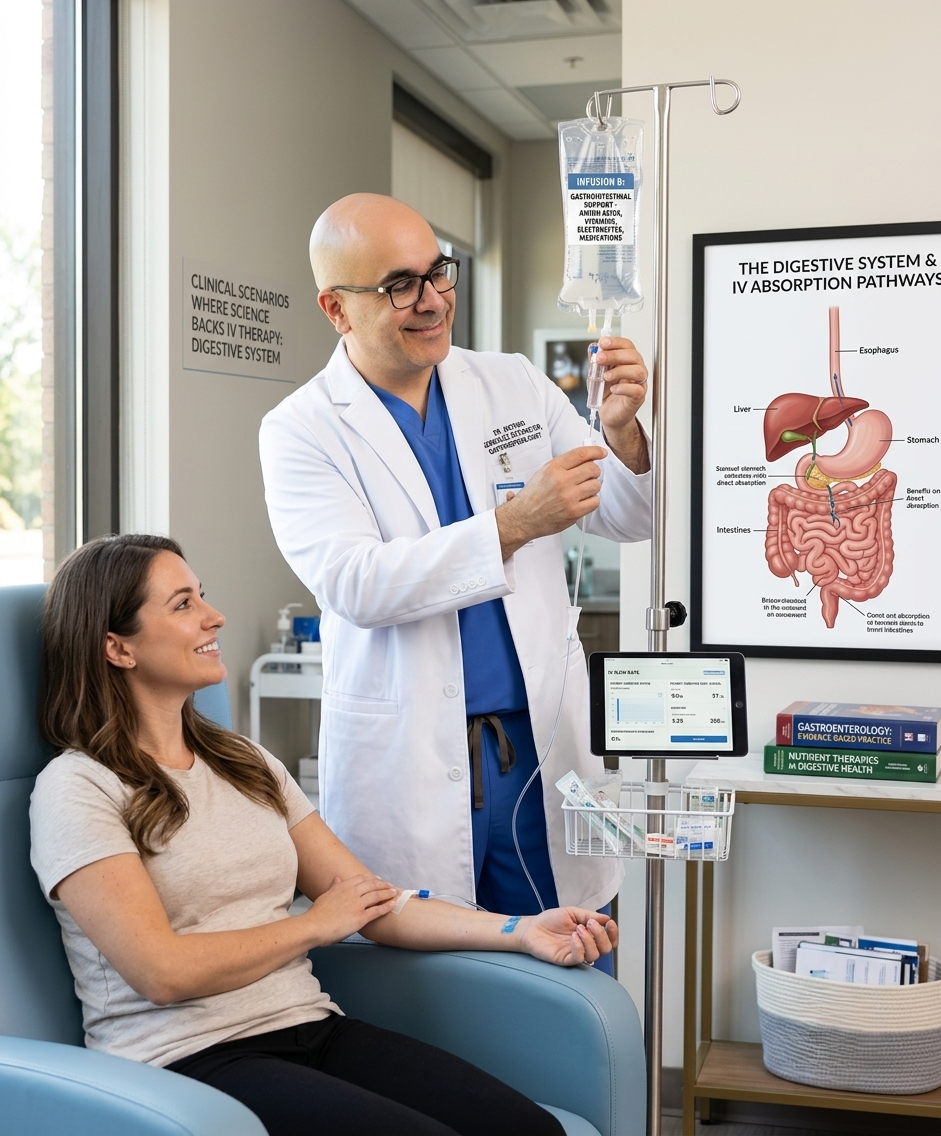
Why the Digestive System Sometimes Needs a “Bypass”
Under optimal health conditions, our gastrointestinal tract is a perfect machine for absorbing nutrients. But when chronic inflammatory or structural compromise occurs, oral supplementation is simply not enough. By delivering micronutrients directly into the bloodstream, we achieve 100% bioavailability, bypassing the intestinal barriers and delivering vital vitamins and minerals directly to the cells that need them most.
Conditions like Crohn’s Disease and Ulcerative Colitis cause severe inflammation and ulcerations in the intestinal walls. This destroys the microvilli responsible for absorbing essential nutrients.
-
The impact: These patients frequently suffer from severe iron-deficiency anemia, as well as critical deficiencies in Vitamin B12, Folic Acid, and Zinc. IV therapy allows these stores to be replenished rapidly and safely without irritating the digestive tract.
1️⃣ Inflammatory Bowel Diseases (IBD)
Conditions like Crohn’s Disease and Ulcerative Colitis cause severe inflammation and ulcerations in the intestinal walls. This destroys the microvilli responsible for absorbing essential nutrients.
- The impact: These patients frequently suffer from severe iron-deficiency anemia, as well as critical deficiencies in Vitamin B12, Folic Acid, and Zinc. IV therapy allows these stores to be replenished rapidly and safely without irritating the digestive tract.
2️⃣ Malabsorption Syndromes and Celiac Disease
Untreated or refractory Celiac Disease causes severe villous atrophy in the small intestine. Even with a strict diet, the body can take months to recover and absorb nutrients efficiently. Intravenous support helps prevent clinical malnutrition during these critical recovery phases.
3️⃣ Short Bowel Syndrome and Post-Surgical Care
Patients who have undergone extensive bowel resections (due to tumors, obstructions, or severe Crohn’s complications) or complex bariatric surgeries physically lose the sections of the intestine where specific vitamins are absorbed. For them, IV therapy or parenteral nutrition is not a luxury—it is a daily or periodic metabolic necessity.
Science backs these therapies only when guided by healthcare professionals. For an infusion treatment to be safe and effective, it requires:
- 📋 Prior medical evaluation: Supported by laboratory bloodwork that proves an actual deficiency.
- 🧪 Sterile, customized formulation: Prepared under strict compounding standards and tailored to the exact electrolyte and metabolic needs of the patient.
- 🏥 Professional administration: Monitored by qualified clinical staff to avoid fluid overload or intravenous complications.
Modern medicine provides extraordinary tools. Utilizing intravenous therapy with a scientific foundation and clinical responsibility is the path to restoring quality of life for those who need it most.
Scientific References for the Medical Community:
- Alangari, A. (2025). To IV or not to IV: The science behind intravenous vitamin therapy. PMC.
- Dayal, S., & Kolasa, K. M. (2021). Consumer Intravenous Vitamin Therapy. Nutrition Today.
- Bonate, P. L., et al. (2023). ACCP Position Statement on Hydration and Vitamin Infusion Clinics. The Journal of Clinical Pharmacology.
#EvidenceBasedMedicine #GutHealth #CrohnsDisease #IVVitamin&MineralsInfusionTherapy #ClinicalNutrition #Gastroenterology #ScienceBasedWellness, #IVVitamin&MineralsSupportedbyScience