
Details
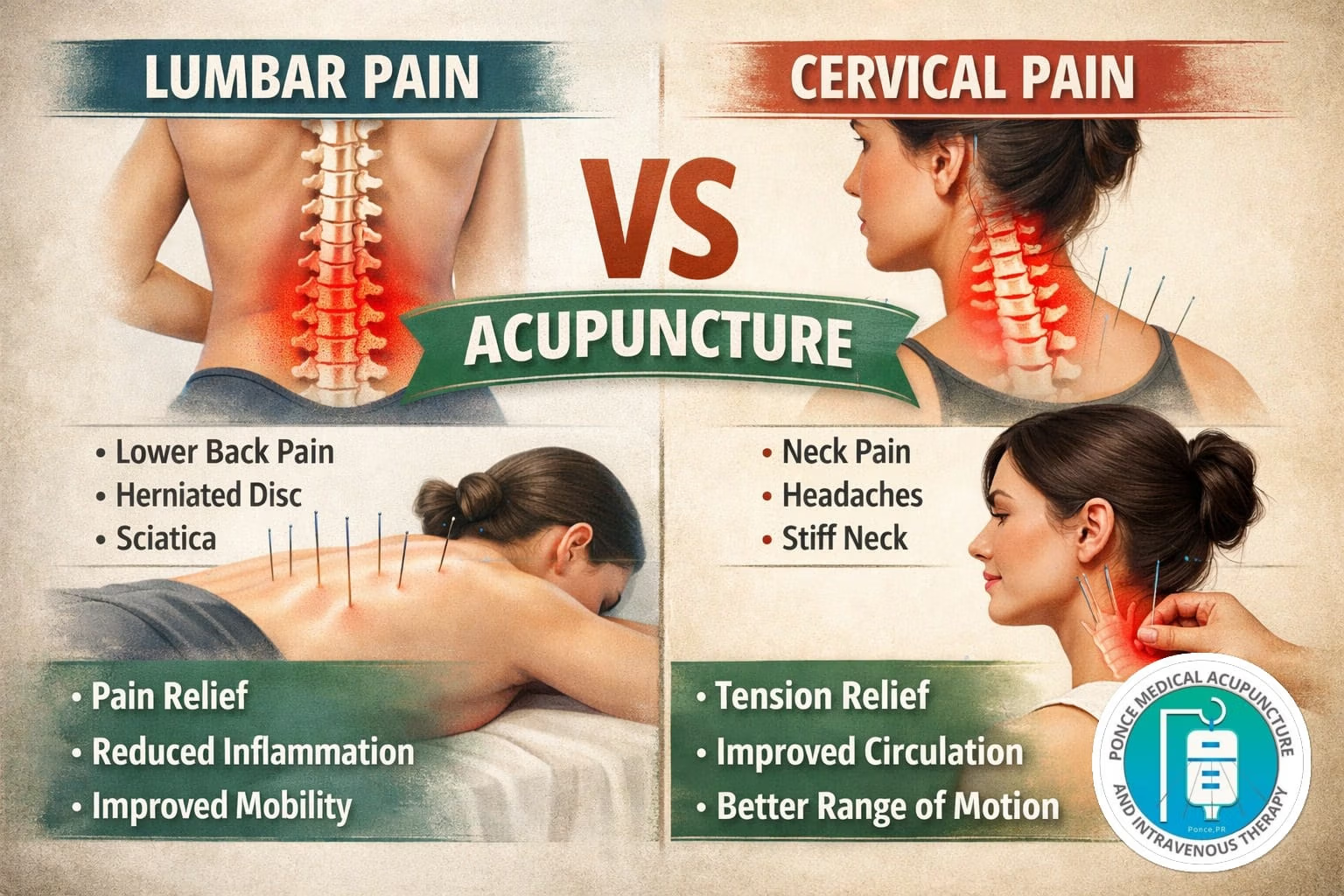
Living with Back or Neck Pain? Acupuncture Could Be Your Best Ally
Back and neck pain are not just physical discomforts—they are among the leading causes of disability worldwide. Millions of people suffer from chronic spinal pain that affects their ability to work, sleep, and perform daily activities.
While many individuals rely on over-the-counter pain medications, acupuncture has emerged as a powerful non-pharmacological treatment supported by a growing body of scientific evidence.
At Ponce Medical Acupuncture and Intravenous Therapy, acupuncture is used as part of an integrative approach to reduce pain, inflammation, and functional limitations.
The Biological Mechanism: How Acupuncture Reduces Pain
Contrary to the common misconception that acupuncture works only as a placebo, modern medical research has identified specific biological mechanisms explaining its effectiveness.
1. Gate Control Theory
The insertion of acupuncture needles stimulates large-diameter nerve fibers, which can effectively “close the gate” in the spinal cord. This mechanism blocks pain signals transmitted by smaller nerve fibers from reaching the brain.
As a result, patients experience reduced pain perception and improved comfort.
2. Neurotransmitter Modulation
Functional MRI (fMRI) studies show that acupuncture activates the body’s endogenous opioid system.
This process releases natural pain-relieving chemicals such as:
-
Enkephalins
-
Beta-endorphins
These compounds are among the most powerful natural analgesics produced by the human body.
3. Reduction of Local Inflammation
The controlled micro-stimulation produced by acupuncture needles promotes the release of adenosine, a molecule with strong anti-inflammatory and pain-modulating properties.
This mechanism helps reduce inflammation in muscles, joints, and surrounding tissues.
Scientific Evidence Supporting Acupuncture
1. Chronic Low Back Pain
A large meta-analysis published in The Journal of Pain involving more than 20,000 patients found that acupuncture is significantly more effective than both standard medical care and sham acupuncture for chronic pain.
Importantly, the benefits were shown to persist for up to 12 months after treatment.
Reference:
Vickers AJ, et al. (2018). Acupuncture for Chronic Pain: Update of an Individual Patient Data Meta-Analysis.
2. Neck Pain and Trapezius Muscle Tension
A randomized clinical study published in Annals of Internal Medicine demonstrated that patients with chronic neck pain who received acupuncture experienced greater pain reduction compared with those treated only with physical therapy or conventional pain medications.
Reference:
MacPherson H, et al. (2015). Acupuncture for Chronic Neck Pain.
3. Global Medical Recommendations
Due to the strong clinical evidence, the American College of Physicians (ACP) recommends acupuncture as one of the first-line therapies for both acute and chronic low back pain, before considering opioid medications.
This reflects a global shift toward safer, non-opioid pain management strategies.
Clinical Benefits of Acupuncture
Improved Functional Ability
Patients often regain the ability to perform everyday activities such as:
-
Lifting objects
-
Driving
-
Sleeping comfortably
-
Sitting or standing for longer periods
Synergistic Treatment Effects
Acupuncture works extremely well when combined with:
-
Physical therapy
-
Rehabilitation programs
-
Regenerative medicine treatments such as PRP (Platelet-Rich Plasma)
Minimal Side Effects
Unlike NSAIDs (non-steroidal anti-inflammatory drugs), which can affect the stomach, kidneys, or cardiovascular system, acupuncture has an excellent safety profile when performed by certified professionals.
Conclusion
Integrating acupuncture into spine pain management is not simply a matter of traditional medicine—it is a science-based clinical decision supported by strong medical evidence.
For patients seeking effective pain relief, reduced inflammation, and improved mobility without the side effects of medications, acupuncture represents a powerful and safe therapeutic option.
share this post:
Facebook
Twitter
Pinterest