
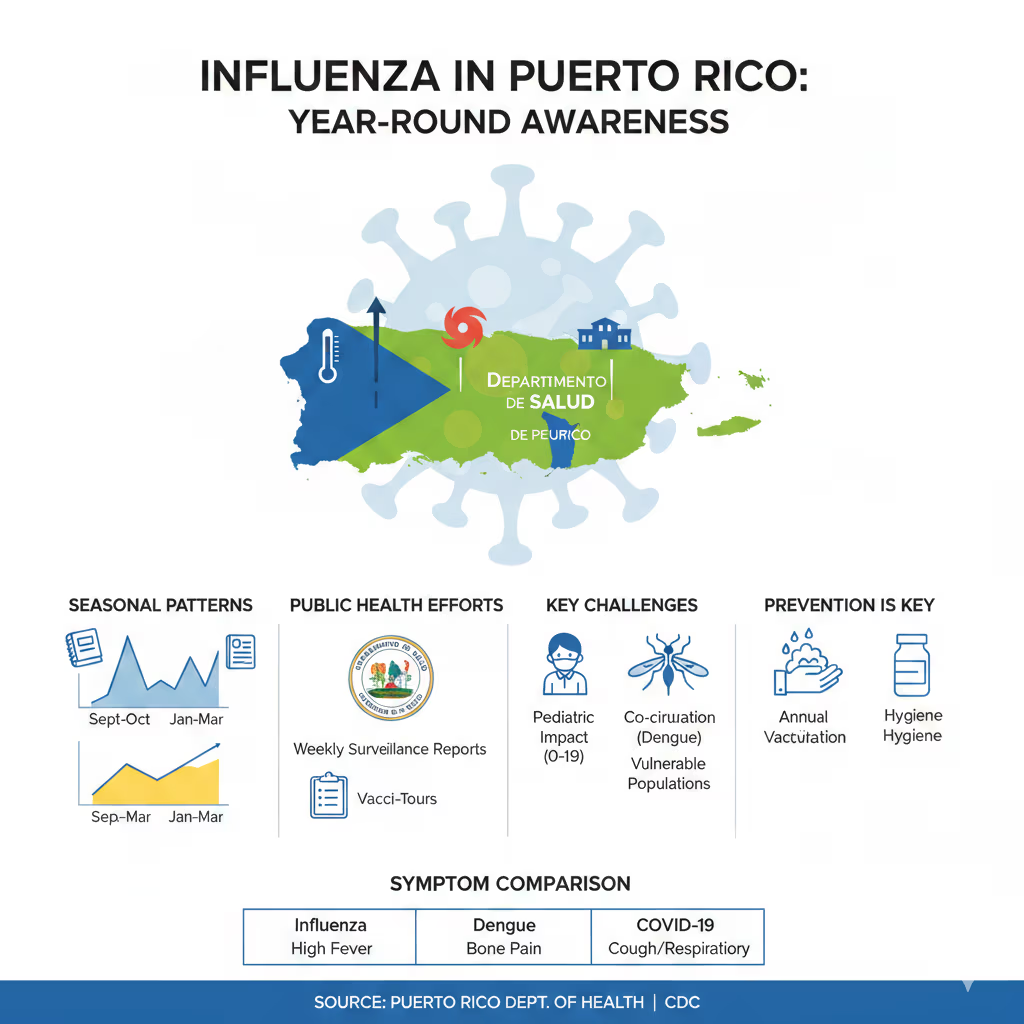
In Puerto Rico, Influenza (the flu) is a significant public health priority due to the island’s unique tropical climate, which creates a different transmission pattern compared to the continental United States. While the U.S. mainland typically sees a sharp winter peak, Puerto Rico can experience high activity throughout the year, often peaking during the rainy season.
Here is an overview of the current landscape of Influenza in Puerto Rico:
1. Seasonal Patterns
Unlike the four distinct seasons in the North, Puerto Rico’s tropical environment allows the virus to circulate year-round.
Peak Periods: Historically, cases begin to rise in September and October, coinciding with the start of the school year and the peak of hurricane season (humidity favors the virus).
Second Wave: A second surge often occurs between January and March, mirroring the peak activity in the continental U.S.
2. Public Health Infrastructure
The Puerto Rico Department of Health (Departamento de Salud de Puerto Rico) maintains a rigorous surveillance system.
Epidemiological Reports: The government publishes weekly “Influenza Surveillance Reports” that track cases by region (Ponce, San Juan, Mayagüez, etc.) and by age group.
Declaration of Epidemic: In late 2023 and early 2024, Puerto Rico officially declared an influenza epidemic due to a massive spike in cases, particularly affecting children and adolescents.
3. Vaccination Culture
Vaccination is the primary tool used by health authorities on the island.
Access: Vaccines are widely available at “Centros 330” (Federally Qualified Health Centers), local pharmacies, and through massive government-led vaccination events called Vacci-Tours.
Timing: Health officials urge residents to get vaccinated as early as August or September to be prepared for the school-year surge.
4. Key Challenges in Puerto Rico
Pediatric Impact: Statistics consistently show that the 0–19 age group is the most affected in Puerto Rico, often leading to school closures or high absenteeism.
Co-circulation: Doctors frequently deal with “syndemics,” where Influenza circulates simultaneously with Dengue and COVID-19. Since symptoms overlap (fever, body aches, fatigue), laboratory testing is essential for a correct diagnosis.
Vulnerable Populations: With a high percentage of elderly residents and people with chronic conditions (diabetes and asthma are prevalent in PR), the risk of complications like pneumonia is high.
5. Prevention and Treatment
The recommendations in Puerto Rico align with CDC guidelines but emphasize local community care:
Annual Vaccination: For everyone 6 months and older.
Early Treatment: Use of antivirals (like Oseltamivir/Tamiflu) is encouraged, especially for high-risk patients in the mountainous regions where access to hospitals may be delayed.
Hygiene: Promotion of handwashing and staying home if symptomatic, a message reinforced strongly since the COVID-19 pandemic.
| Feature | Influenza | Dengue | COVID-19 |
| Primary Symptom | High Fever & Chills | Severe Bone Pain | Respiratory issues/Cough |
| Transmission | Respiratory droplets | Mosquito bites | Respiratory droplets |
| Peak Season | Sept–Oct / Jan–Mar | Rainy Season (May–Nov) | Year-round |
Official Public Health Sources
Departamento de Salud de Puerto Rico (PR Department of Health):
Weekly Influenza Surveillance Reports (Informes de Vigilancia de Influenza). These provide the specific data for the island’s regions (such as Ponce, San Juan, and Bayamón).
Website: salud.pr.gov
Centers for Disease Control and Prevention (CDC):
Information for Schools & Childcare Providers: Influenza in Puerto Rico.
Prevention and Control of Seasonal Influenza with Vaccines: Recommendations of the Advisory Committee on Immunization Practices (ACIP).
Website: cdc.gov/flu
World Health Organization (WHO):
Global Influenza Programme: For data regarding tropical climate transmission patterns and strain selection for the Southern and Northern Hemispheres (Puerto Rico typically follows the Northern Hemisphere vaccine).
Clinical References
National Institutes of Health (NIH):
Studies on “Syndemics” in the Caribbean, focusing on the overlap of Influenza, Dengue, and COVID-19.
Pan American Health Organization (PAHO):
Health in the Americas: Puerto Rico Profile. This includes data on chronic conditions like asthma and diabetes that increase flu complications on the island.