
Monkeypox is a disease caused by an infection with an orthopoxvirus, which belongs to the same family of viruses as smallpox. It is a zoonotic disease, meaning it can spread between animals and people. The Monkeypox virus can infect a wide range of mammalian species, including monkeys, anteaters, hedgehogs, prairie dogs, squirrels, and shrews.
People can become infected through direct contact with infected animals, often while hunting, trapping, or processing them, or through contact with their body fluids. Small mammals can carry the virus, sometimes without apparent symptoms, while non-human primates can become ill and show signs of disease similar to humans. According to the CDC, symptoms of Monkeypox are similar to those of smallpox but milder, and the disease is rarely fatal. Monkeypox is not related to chickenpox.
Symptoms
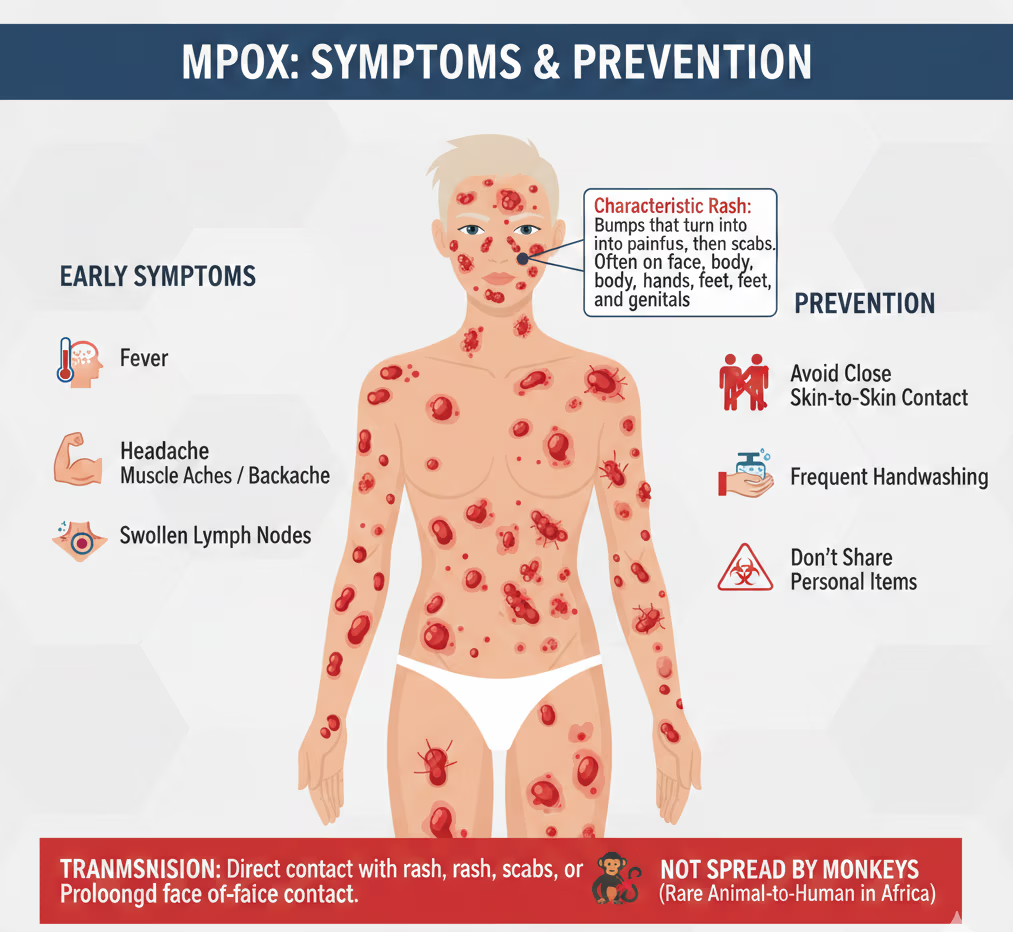
Symptoms experienced after infection may include:
-
Fever
-
Headache
-
Muscle aches and backache
-
Swollen lymph nodes
-
Chills
-
Exhaustion
-
A rash that looks like pimples or blisters on the face, inside the mouth, and on other parts of the body such as the hands, feet, chest, genitals, or anus.
The rash goes through several stages before healing completely. The illness typically lasts 2 to 4 weeks. Sometimes, people develop a rash first, followed by other symptoms. Others may only experience a rash.
Prevention
According to the Centers for Disease Control and Prevention (CDC), the following recommendations help prevent the spread of the disease:
-
Avoid close, skin-to-skin contact with people who have a rash that looks like Monkeypox.
-
Do not touch the rash or scabs of a person with Monkeypox.
-
Do not kiss, hug, or have sexual relations with someone who is suspected of having or has Monkeypox.
-
Do not share eating utensils or cups with someone who is suspected of having or has Monkeypox.
-
Do not handle or touch the bedding, towels, or clothing of a person with Monkeypox.
-
Wash your hands frequently with soap and water or use an alcohol-based hand sanitizer.
-
In Central and West Africa, avoid contact with animals that can spread the virus, typically rodents and primates. Avoid sick or dead animals and any materials they have touched.
If you are sick with Monkeypox, you should isolate at home. If you have a rash or other symptoms, stay in a separate room away from the people or pets you live with.
How it Spreads
Monkeypox spreads between people through direct contact with an infectious rash, body fluids, or respiratory secretions during prolonged face-to-face contact. Transmission is possible from the onset of the first symptoms until the scabs have fallen off and the skin has completely healed.
During the infection period, body fluids, respiratory secretions, and material from lesions can contaminate the environment. These poxviruses can survive on bedding and environmental surfaces, especially in dark, cool, and low-humidity environments.
However, orthopoxviruses are very sensitive to ultraviolet (UV) light. They are also sensitive to many disinfectants. It is recommended to disinfect all areas (such as the home and vehicle) and items potentially contaminated. It is advisable for infected individuals to wash their own laundry and clean the spaces they have used to prevent infecting others.
Key Point: Monkeypox can spread from the moment symptoms begin until the rash has fully healed and a new layer of skin has formed. This usually takes 2 to 4 weeks. People without symptoms cannot spread the virus to others. According to the CDC, it is currently unknown if Monkeypox can spread through semen or vaginal fluids.
Nota Médica:
Recientemente, la Organización Mundial de la Salud (OMS) y el CDC han pasado a utilizar el término “Mpox” en lugar de “Monkeypox” para evitar estigmas, aunque ambos se entienden. He utilizado “Mpox” en los encabezados por ser lo más actualizado para 2026.